Evolving the Minds of the 21st Century
STEM high schools are specialized, pre-college boarding schools designed to cultivate creative thinkers and scientific pioneers. By replacing rote learning with self-directed research and engineering design, STEM prepares Egypt's brightest students to solve real-world challenges.
Portal Navigator
Science
Hands-on biology, chemistry, physics, and geology lessons inside state-of-the-art laboratories.
Technology
Mastery of database systems, programming, and instrumentation to capture and analyze data.
Engineering
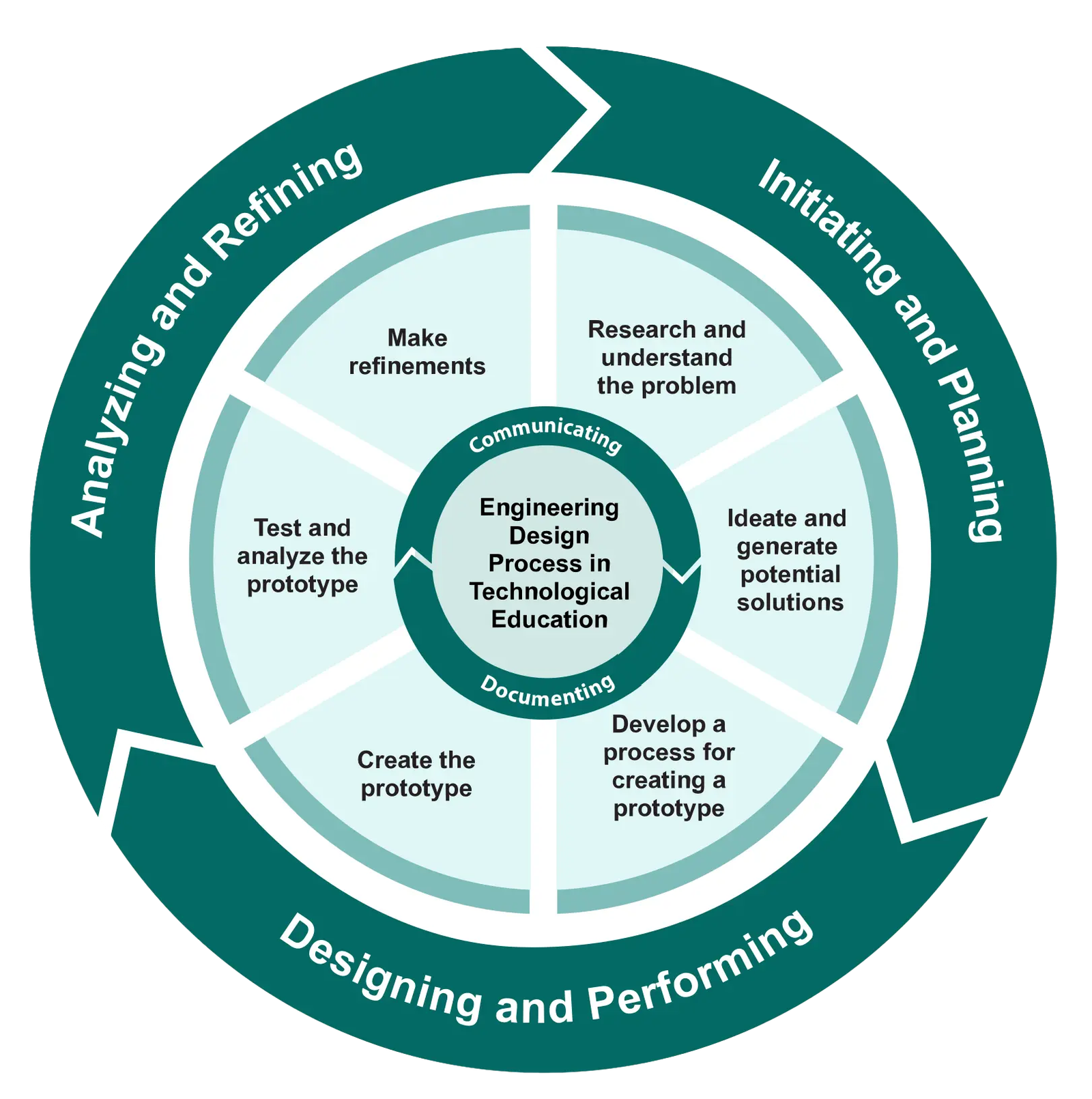
Employing the Engineering Design Process (EDP) to build prototypes that solve grand national challenges.
Mathematics
Developing robust problem-solving skills through advanced calculus, algebra, and classical mechanics.
Admission Requirements
Qualifications needed to apply for the STEM schools admission exams.
Category A: High Honor Entry
Students must achieve a total score of 274.5 marks or higher (98%) in the preparatory school certificate, without the necessity of obtaining full marks in any specific core subjects.
Category B: Subject Honor Entry
Students can qualify with a total score of 266 marks or higher (95%). However, they must obtain full marks in at least one of the following subjects: Mathematics, Science, or English.
Patent Holder Exemption: Students who do not meet the academic score requirements can still apply if they submit an official, approved patent certificate registered and recognized by the Academy of Scientific Research and Technology (ASRT).
The student must be an Egyptian national.
Age must not exceed 18 years on October 1st of the application year.
Passed basic education exams on the first attempt in the preceding school year.
Free from chronic health or medical conditions requiring specialized daily care.
The Admission Exams
Eligible applicants must pass a multi-stage competitive test consisting of four core exams.
English Exam
Assesses cumulative grammar, reading comprehension, vocabulary, and linguistic skills.
Science Exam
Assesses scientific thinking, conceptual comprehension, chemistry, physics, and biology.
Math Exam
Assesses arithmetic capacity, algebra, basic geometry, and mathematical logic.
IQ Exam
Measures cognitive intelligence, pattern recognition, and rapid problem-solving abilities.
Note on Placement: Selection is based strictly on a student's total rank score. High-scoring candidates are assigned to STEM branches across the nation based on ranking and capacity; placement locations are automated.
Access Study PrepDaily Routine & Life
Learn about boarding life, summer camps, and class routines at STEM schools.
Easing In: The Summer Camp
Before the academic year begins, newly admitted students attend a mandatory 2-week summer camp. This camp helps students adapt to the boarding system, introduces them to the Capstone concept, and improves their English language proficiency to prepare them for an English-taught curriculum.
Class Hours
The academic day starts sharp at 7:30 AM and finishes at 2:00 PM, consisting of four sessions, each lasting 90 minutes.
Class Size
Classes are kept small (typically 20 to 25 students) to ensure focused instruction and collaborative learning.
Practical Work
Scientific sessions are regularly conducted inside laboratories, allowing students to verify theories with experiments.
Weekly Stay
Students reside at the boarding hotel from Saturday afternoon until Thursday afternoon. School buses handle transit.
Dining & Meals
Three high-quality meals are served daily (breakfast, lunch, and dinner) in the dining hall with balanced nutritional content.
Study Groups
Evenings at the hotel are dedicated to self-directed study, group collaborations for projects, and recreational activities.
STEM Education System
A student-centered model designed to replace memorization with analytical inquiry.
English First
All core courses are taught in English to prepare students for international standards.
Mentors, Not Lecturers
Teachers guide research and facilitate learning rather than simply reading textbooks.
Self-Directed Study
Students present concepts, conduct literature reviews, and search for source material.
Scientific Rigor
Curriculums are focused heavily on physics, chemistry, biology, geology, and calculus.
Interactive & Modern Methodologies
Unlike traditional school systems, STEM schools focus on active collaboration. By utilizing interactive presentations, database search engines, and physical laboratories, students develop critical skills that make them stand out in global research environments.
The Academic Journey
Explore the curriculum structure and access specific materials for each grade.
Grade 10
Students build foundational knowledge across all sciences: Chemistry, Physics, Biology, Geology, Mathematics, and Mechanics, alongside humanities.
Grade 10 MaterialsGrade 11
Curriculum deepens into complex physics, organic chemistry, advanced geometry, mechanics, and human civilizations/social studies.
Grade 11 MaterialsGrade 12
The senior year features high academic focus. Students branch into the Math division (calculus & mechanics) or Biology division (biology & geology).
Grade 12 MaterialsCapstone Project & Evaluation
The heart of the STEM curriculum—applying EDP to solve Egypt's grand challenges.
The Engineering Design Process (EDP)
The EDP is a systematic approach to solving complex problems. Students are divided into teams to address challenges such as water sanitation, energy security, and population issues. They present their final products to expert committees.
Capstone Grading Breakdown